Paint Enhancement vs. Paint Correction: Which Does Your Car Need?
The difference between a $100 paint enhancement, a $500 1-step correction and a $1,000 2-step correction — and how to tell which your paint needs.
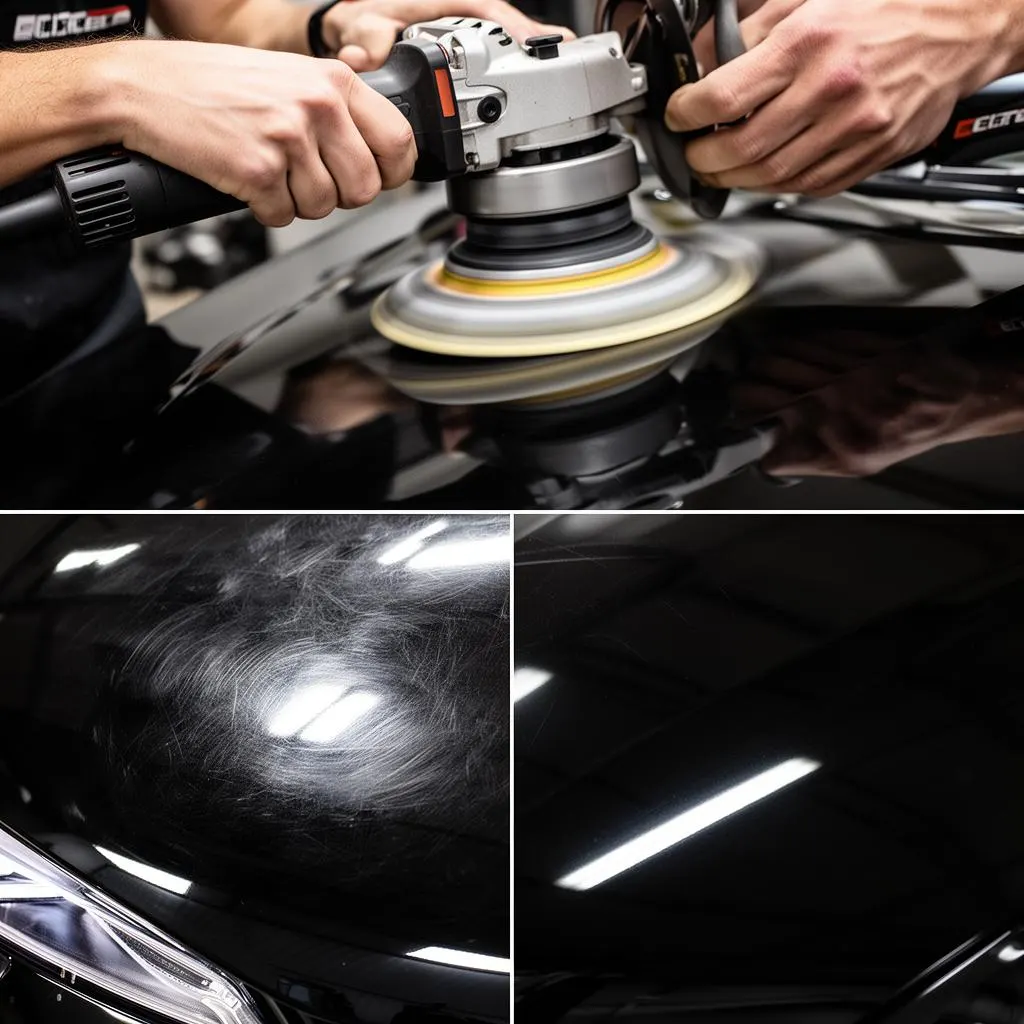
Short answer: if your paint looks a little dull and has light swirls you only notice in direct sun, a Paint Enhancement ($100) is usually enough. If the swirls are obvious, or you're about to put a ceramic coating on the car, a 1-Step Paint Correction ($500) is the right call. If you can see scratches in the shade or the paint looks faded and hazy, you're looking at a 2-Step Correction ($1,000). All three are flat prices for any vehicle size.
All three use the same basic tool — a machine polisher — but they remove different amounts of damage. Swirls and light scratches live in the top layer of clear coat. Polishing levels that layer so light reflects evenly again, which is what makes paint look glossy. The more passes and the more aggressive the compound, the deeper the defects you can remove and the longer the job takes.
Paint Enhancement is a single-stage polish: one product, one pass over the car. It brightens dull paint, softens light swirls and brings back gloss, and it adds about an hour to an Exterior Wash & Wax or Full Detail. It does not remove deeper scratches or heavy swirling — it's a refresh, not a repair. It's already included in our Showroom package.
A 1-Step Paint Correction is a dedicated polishing service, done panel by panel with more time on each section. It typically removes roughly 70–80% of swirls and light scratches. This is the one we recommend for most daily drivers before a ceramic coating, because a coating locks in whatever is underneath it for the life of the coating.
A 2-Step Paint Correction adds a cutting stage before the polish. The cut removes deeper scratches, heavy swirling and oxidation; the polish then refines the finish. It typically removes roughly 85–95% of defects for a near-mirror finish. It's the right choice for dark paint with heavy spiderwebbing, older cars with faded paint, or anyone who wants the best possible finish under a coating.
How to check your own paint: wash the car (or pick a clean panel), then look at it in direct sunlight from a couple of angles. Fine circular scratches around the sun's reflection are swirls. If you only see a few and the paint just looks a bit flat, that's Paint Enhancement territory. If the swirls are everywhere, go 1-Step. If you can see scratches in the shade too, go 2-Step. One more test: if a scratch catches your fingernail, it's probably through the clear coat and no polish will fully remove it.
What none of them fix: rock chips, dents, peeling clear coat, or scratches down to the primer or metal. Those need touch-up paint or body work. We'll always tell you on site what polishing can and can't do before we start.
Which should you pair with what? Getting a regular detail and want the paint to pop: add Paint Enhancement. Getting a ceramic coating: do at least a 1-Step first — see our ceramic coating cost guide for how the prices add up. Not sure? Pick the closest option in the instant quote, and we'll inspect the paint and confirm the right level with you before we start.
Want a real quote for your vehicle?
Get an instant quote →